芯耀
芯耀
 与非AI
与非AI





 1456
1456
NOTE:Click here for the Chinese version.
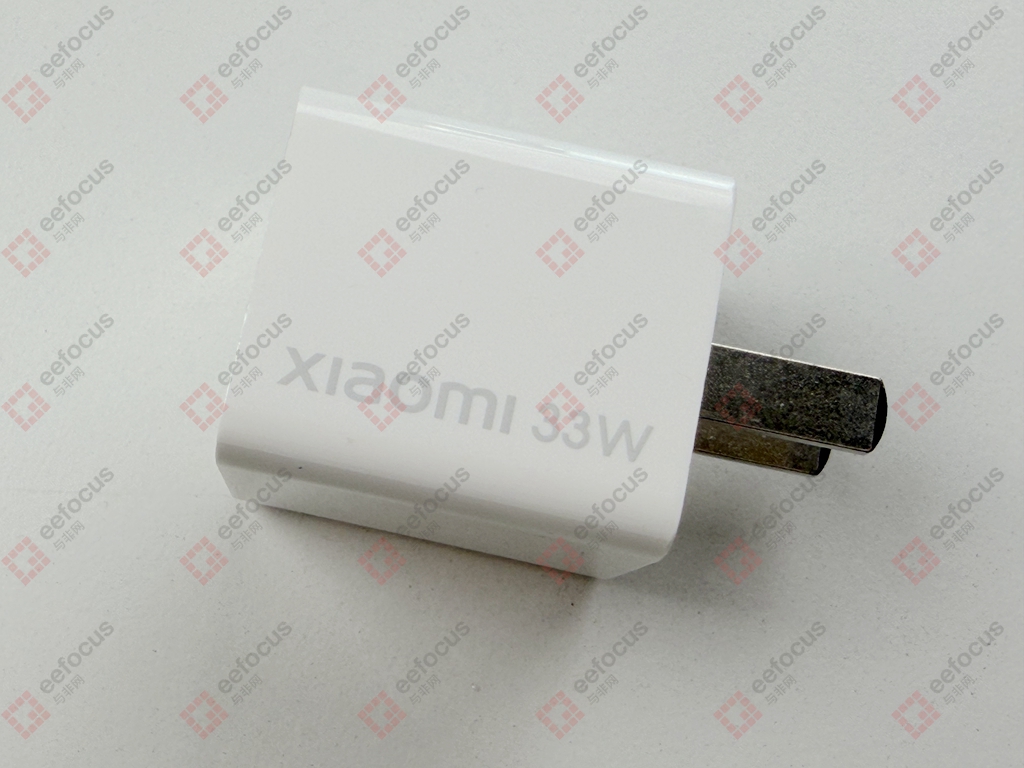
Remember Xiaomi's first-generation compact 33W GaN charger? With its small size and powerful performance, its biggest highlight was increasing the power density to 1.05W/cm³. It was almost only half the size of Apple's 30W charger at the time, yet it could provide 33W fast charging. The product features a square design, with a white glossy finish on the shell, giving it a simple and modern overall appearance. The body of the charger is printed with the "xiaomi 33W" logo. It uses a fixed national standard plug, and the output end is equipped with a single USB-C output port. It not only supports Xiaomi's own private fast charging protocol but is also fully compatible with mainstream fast charging protocols such as USB PD, PPS, and QC. In this episode, EEFOCUS will disassemble this product.
Disassembly
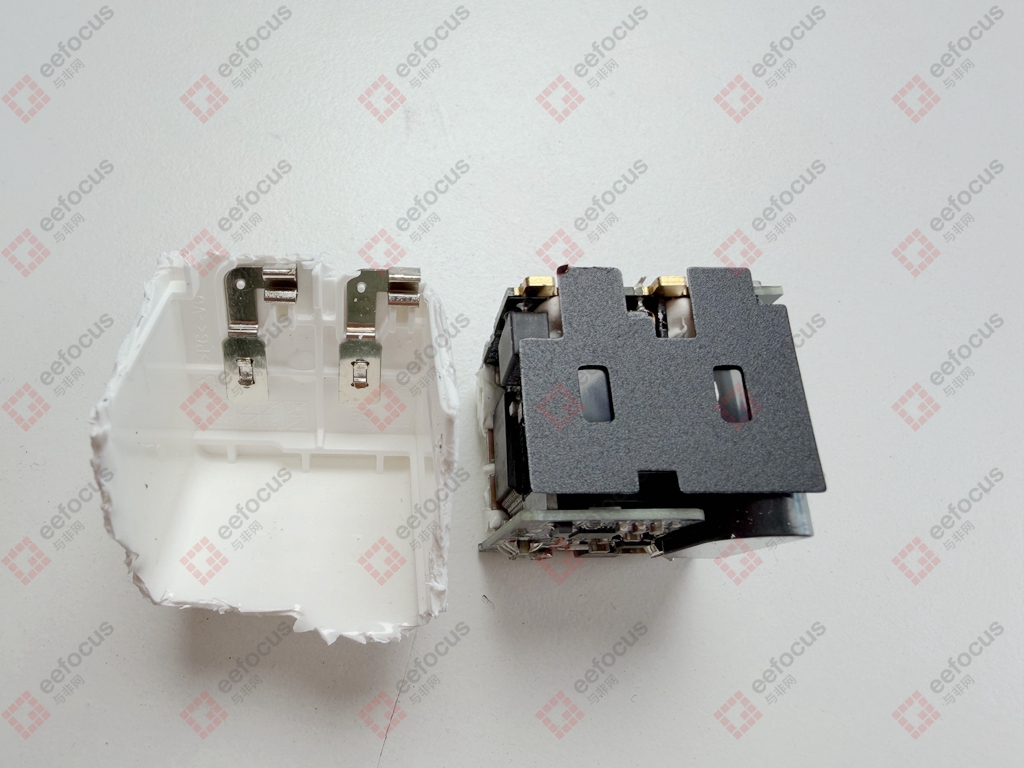
After forcibly opening the outer shell, it can be seen that the internal structure is very delicate and compact. The module and the shell are filled with adhesive for reinforcement and heat conduction. An insulating barrier is set on the input end. The primary and secondary small boards are isolated from high and low voltage through an integrated plastic shell, ensuring a safe distance. The internal structure consists of three small PCB boards combined and soldered together. The input end small board connects to the fixed national standard plug via copper contacts resembling "gold fingers" on the input side small board.
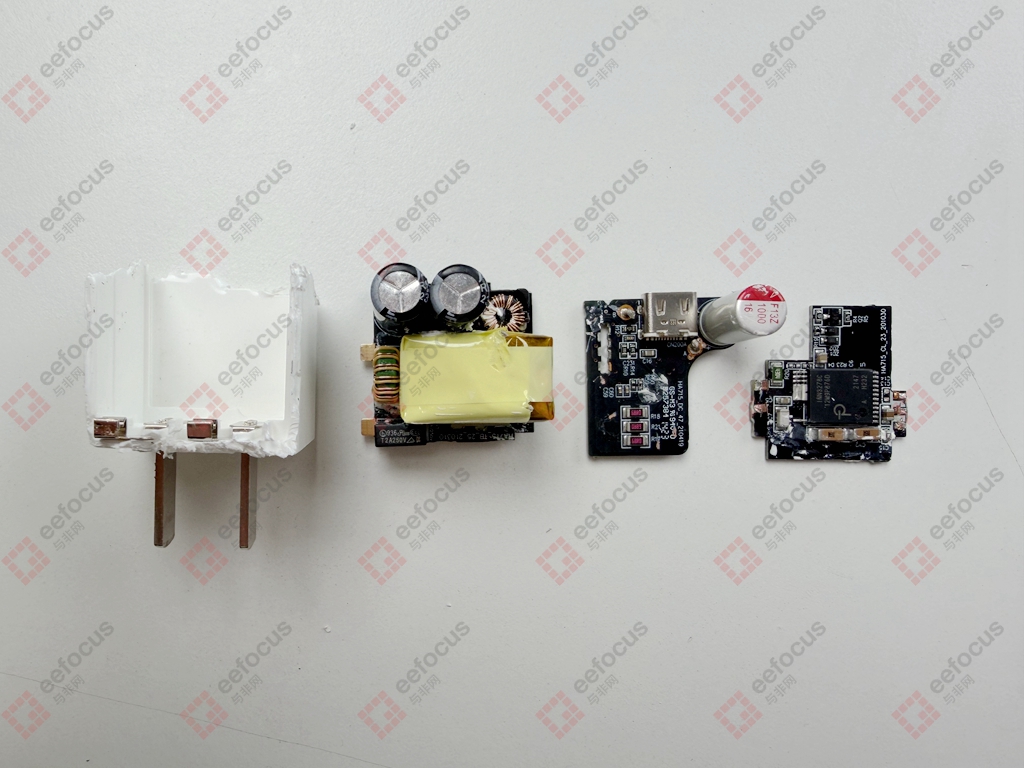
Finally, the three small PCB boards were disassembled separately: the input end small board, the control small board, and the output end small board.
Input End Small Board
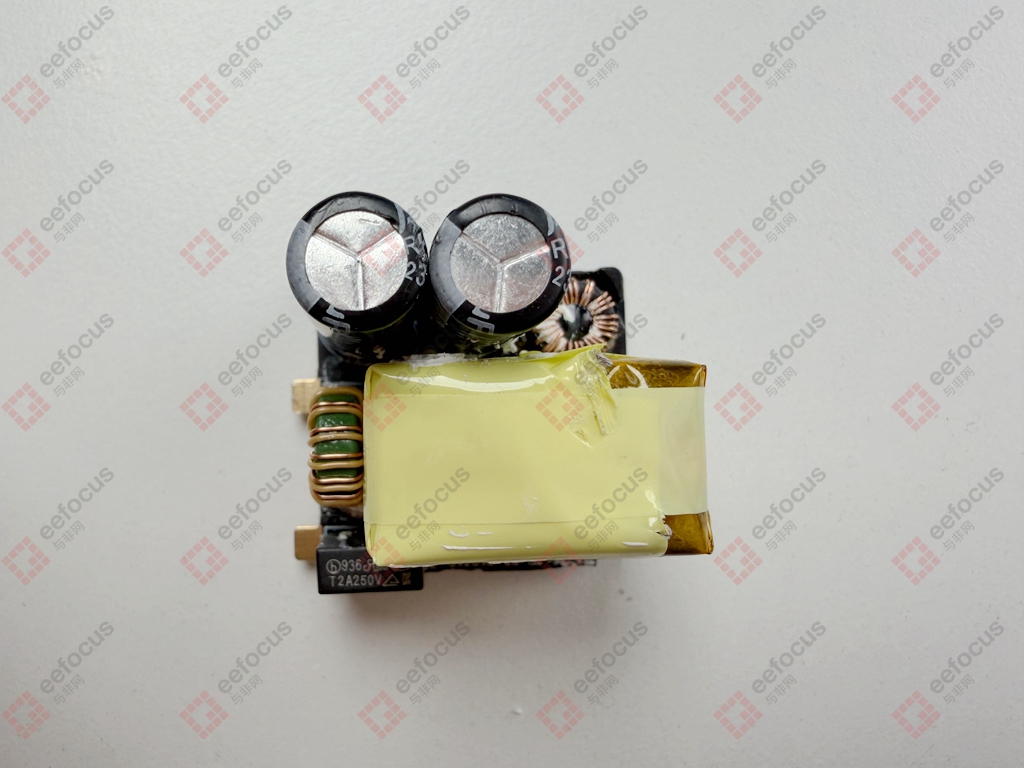
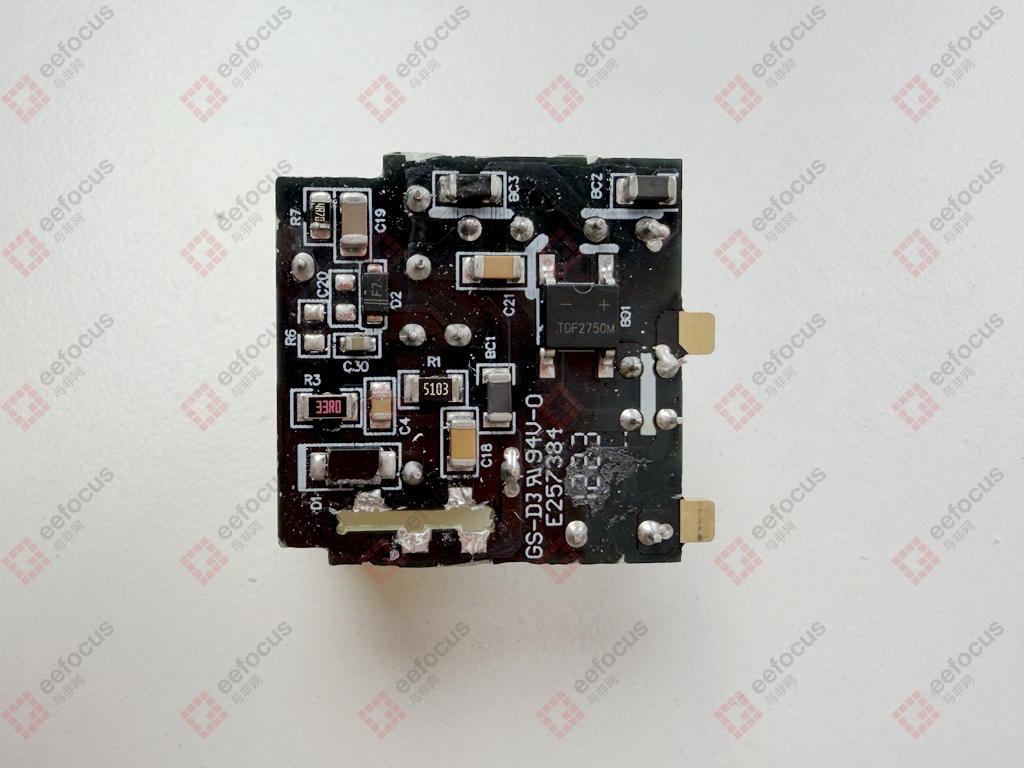
The components on the front side of the input end PCB small board include a time-delay fuse, an input common mode inductor (used to filter EMI interference), two AiSHi high-voltage filter electrolytic capacitors, a magnetic ring filter inductor, and a transformer.
The back side of the input end PCB small board mainly features a rectifier bridge, silk-screened as TDF2750M, responsible for the initial conversion from AC to DC.
Control Small Board
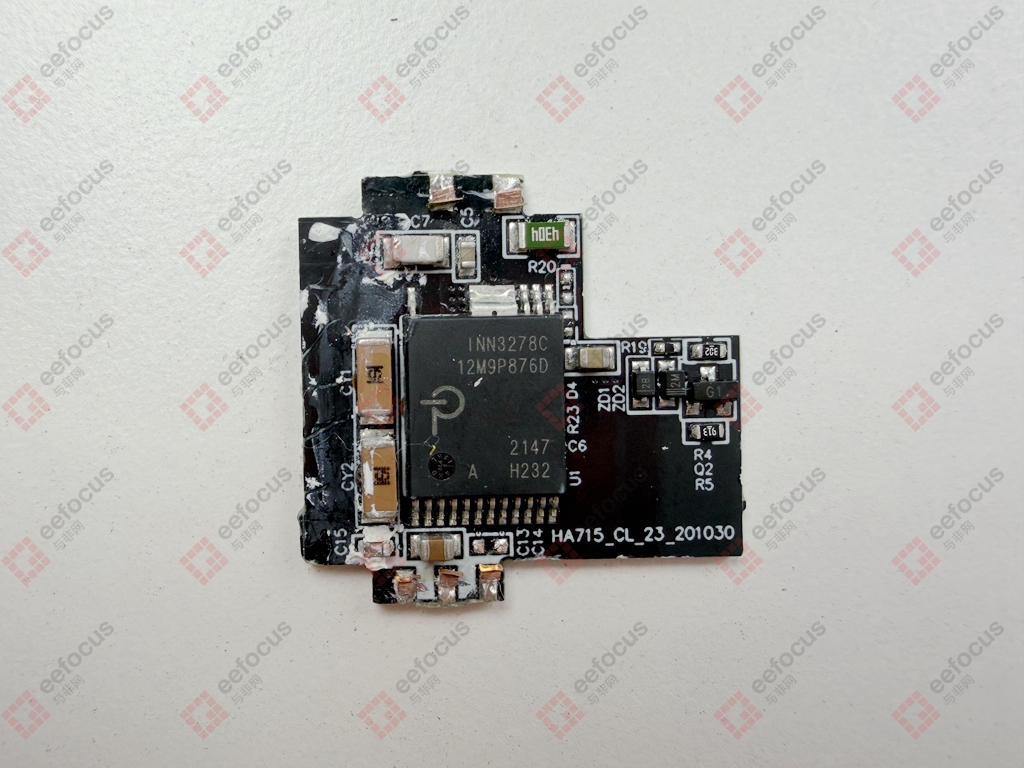
The control small board is relatively simple. The front side mainly features the core of the gallium nitride charger—the PI INN3278C. This is an offline flyback constant voltage/constant current quasi-resonant switcher IC with an integrated primary side switch, synchronous rectification, FluxLink feedback, and constant power characteristics. Its high level of integration significantly simplifies circuit design and reduces the number of external components, which is crucial for achieving miniaturization. According to the official datasheet, the INN3278C supports output up to 55W in a sealed environment, while Xiaomi derates it to 33W, helping to reduce heat generation. Next to the INN3278C are two series-connected chip Y capacitors.
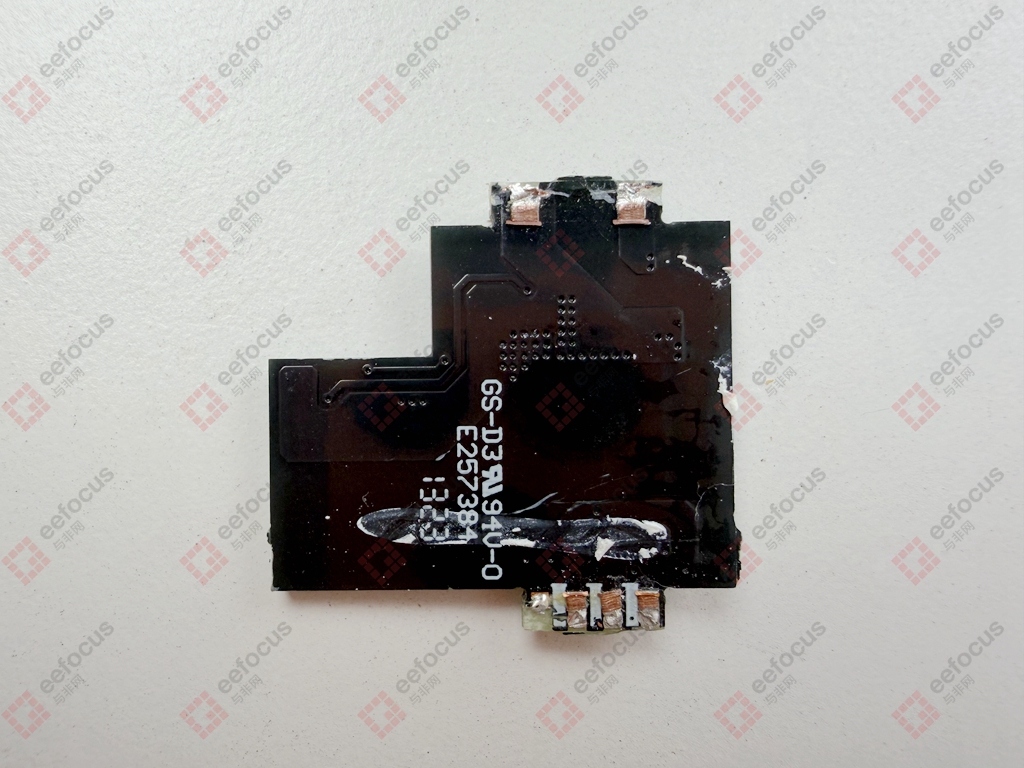
The back side of the control small board has no components.
Output End Small Board
The output end small board contains several important chips in Xiaomi's gallium nitride charger solution.
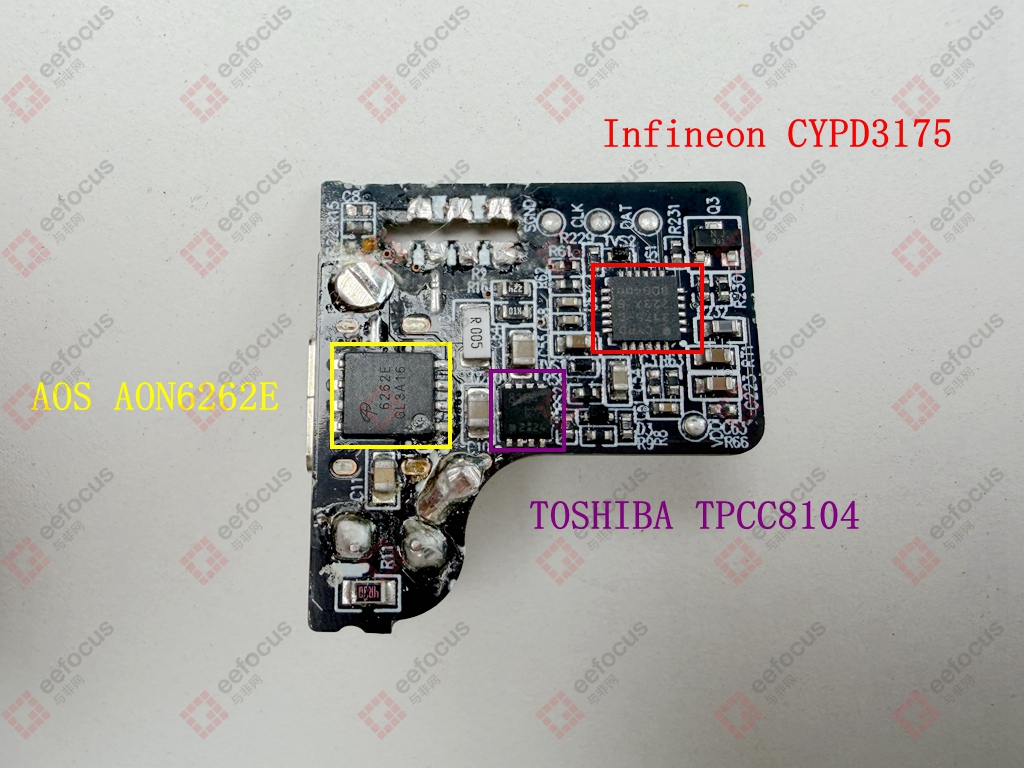
The protocol chip uses Infineon's CYPD3175, a USB PD3.0 certified chip that supports the PPS fast charging protocol. It is highly integrated, featuring a built-in 32-bit MCU and various protection functions. It can intelligently identify the type of connected device and automatically adjust output parameters to ensure optimal charging efficiency.
The synchronous rectifier uses AOS AON6262E, with a withstand voltage of 60V, responsible for converting the high-frequency AC from the transformer's secondary winding to DC.
The VBUS switch uses Toshiba TPCC8104, a PMOS with a withstand voltage of 30V, controlling the output on/off.
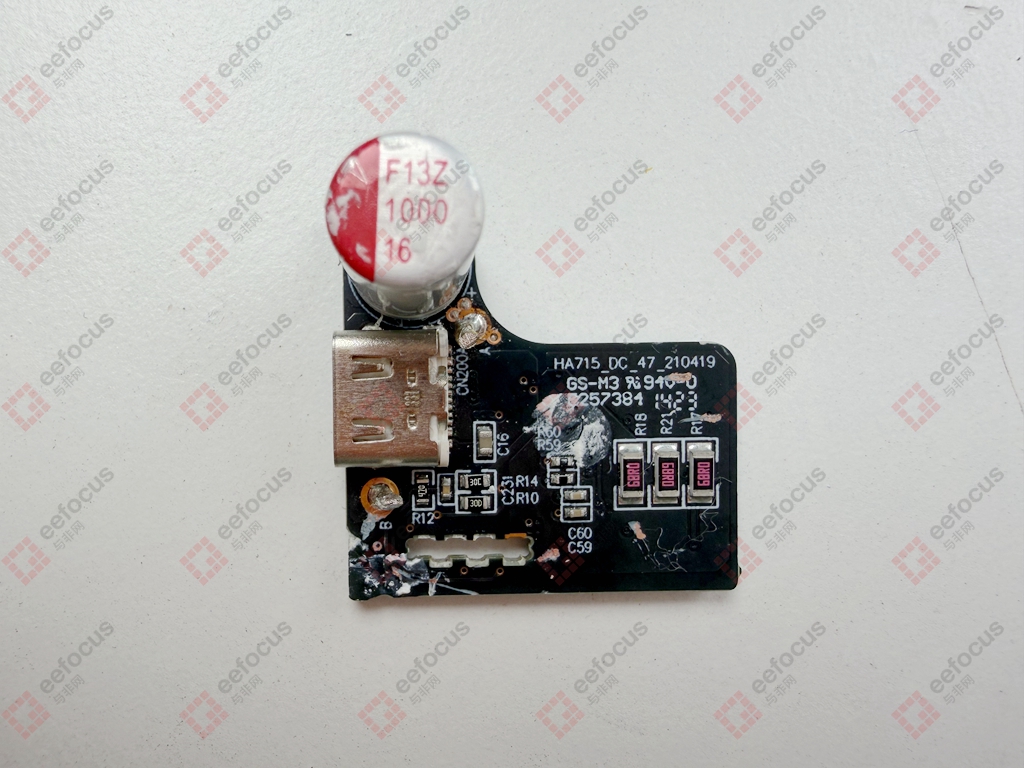
The other side of the output end small board contains the USB Type-C output port, solid capacitor filter capacitor, and some resistive-capacitive components.
| 厂商 | 型号 | 说明 |
| PI | INN3278 | QR Flyback Switcher IC |
| AOS | AON6262E | N-Channel MOSFET |
| Infineon | CYPD3175 | USB PD |
| TOSHIBA | TPCC8104 | P-Channel MOSFET |
Summary
The above is the hardware scheme of the Xiaomi 33W GaN charger. It can be said to represent the advanced level of mini fast charging technology at that time. Its exquisite design and solid material selection demonstrate the technological achievements of consumer electronics power supplies. Even by today's standards, this product remains a classic high-power density gallium nitride charger, although it uses very few domestic Chinese chips. Looking at the wide variety of gallium nitride chargers on the domestic market today, most are based on domestic Chinese chip solutions, which shows how fast the domestic semiconductor industry has developed. It is worth noting that domestic substitution is not simply a matter of replacing specifications; it also requires consideration of compatibility, stability, energy efficiency standards, and other multiple factors. Especially under large-scale production conditions, maintaining consistency is a key challenge. For consumers, domestic localization not only implies potential cost reductions but also relates to supply chain security and industrial autonomy and controllability. What is your view on this transformation? Welcome to leave a message and discuss!
来源: 与非网,作者: 曹顺程,原文链接: https://www.eefocus.com/article/1919050.html